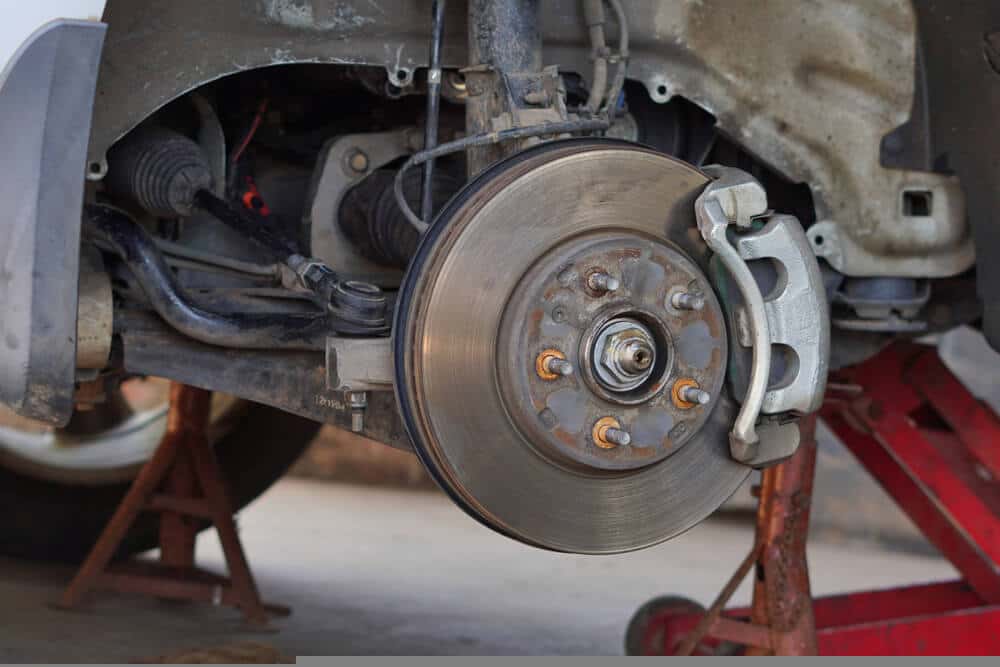
Brake pads are built to wear out. They are the one component you replace on purpose, trading a little friction material for the ability to stop a 4,500-pound SUV. So how many miles do brake pads last? Most sets go 30,000 to 70,000 miles, and where you land inside that range says more about your commute than your odometer.
That spread is wide for a reason. A driver covering Route 3 into Boston at a steady clip barely touches the pedal. Somebody running errands along Route 53 through Hanover, stopping every few hundred feet, is braking constantly. Same vehicle, same mileage, very different wear. The service team at 24 INFINITI of Plymouth inspects brakes for drivers across Plymouth, Kingston, and Hanover, MA, and measures thickness rather than guessing from a number.
Key Takeaways
How often you brake, not how far you drive. Every stop scrapes away friction material, so braking events per mile matter more than total miles.
Several factors stack on top of that:
Add it up and two identical vehicles bought the same week can need brakes 30,000 miles apart. That is normal.
At every oil and filter service or tire rotation. Your vehicle is already on the lift, so a thickness measurement takes minutes and gives you a real number instead of an estimate.
Between visits, your ears and the pedal will tell you plenty. A high-pitched squeal usually means a wear indicator is doing its job. Grinding means the friction material is gone and metal is contacting the rotor. A pedal that feels soft, a vibration under braking, or a pull to one side all point to something worth checking sooner rather than later.
New England adds its own wrinkle. Road treatment through a South Shore winter is hard on caliper slide pins and brake hardware, and a seized pin wears one pad unevenly while the other barely moves. That is exactly what a technician looks for during an inspection.
Your vehicle usually warns you before the measurement does. Watch for these:
Noticing any of these means it is time for an inspection. That is where our service department comes in, staffed by factory-trained technicians using genuine INFINITI parts built to the specifications your vehicle left the factory with. A brake visit covers pad thickness measurement, rotor condition, caliper and hardware inspection, and a brake fluid check. Your technician will tell you what they measured and whether the rotors can be reused or should be replaced alongside the pads. Book online and pair it with a tire rotation to handle both in one stop.
Driving with worn brakes can lead to damage beyond just the brake pads. As pads wear down, they can affect the rotors and other braking components, increasing repair costs. Reduced braking performance can also extend stopping distances, which impacts overall vehicle control. In some cases, uneven braking may contribute to irregular tire wear, shortening tire life as well.*
No. Front pads wear faster because weight shifts forward under braking, giving the front brakes most of the stopping work. Expect to replace fronts more often than rears, which is why technicians measure all four corners separately.
No. Unlike an oil and filter service, brake pads have no set interval because wear depends on driving conditions. Manufacturers recommend regular inspections instead, since remaining thickness is the only reliable measure of pad life.
So, how many miles do brake pads last? Plan on 30,000 to 70,000 and let an actual measurement settle it. If you are commuting mostly highway miles, expect the upper end. If your week is stop-and-go traffic, hills, or towing, plan on the lower end and inspect sooner.
24 INFINITI of Plymouth serves drivers across Plymouth, Kingston, and Hanover, MA, with factory-trained technicians and genuine INFINITI parts. Schedule your service appointment in a few clicks!
*Source: AAA